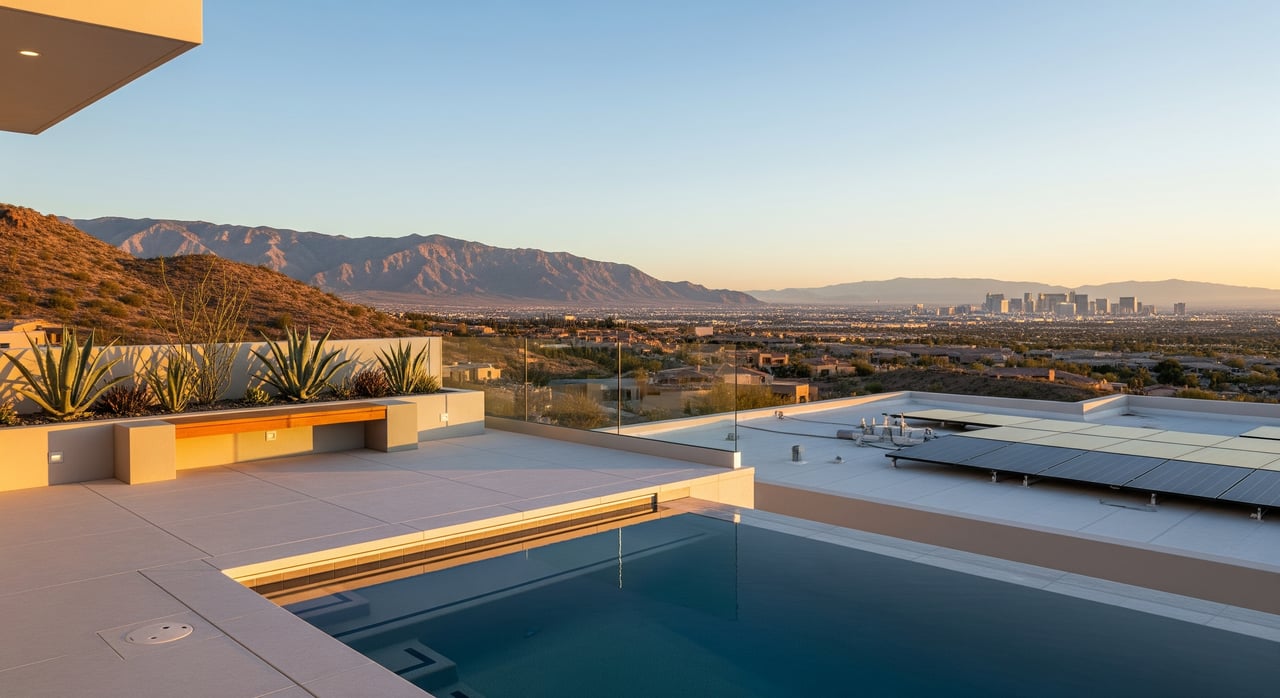
Pool Efficiency for MacDonald Highlands Hillside View Homes
November 6, 2025
November 6, 2025
Love the view from your hillside pool but hate watching water and energy slip away to sun and wind? In MacDonald Highlands, your elevated setting is part of the magic, yet the desert climate and ridge exposure can push evaporation and utility costs higher than you’d like. With the right upgrades and smart design, you can protect your view, curb water loss, and quiet your equipment. This guide shows you practical steps, local approval tips, and upgrades that work for hillside pools in Henderson. Let’s dive in.
Henderson’s arid desert climate brings very hot summers, low humidity, and high evapotranspiration. That means faster evaporation and higher energy demand for circulation and heating. On hillside and ridge lots, you often have more direct sun and stronger wind across the water surface, which accelerates evaporation.
Pool orientation also matters. South and west exposure typically sees more intense sun, which warms the water and speeds loss. On sloped lots, equipment access, anchor placement for shade structures, and view corridor rules add design constraints. In a gated, master-planned setting, expect design review for visible equipment, shade elements, and enclosures.
A variable-speed pump lets you match flow to actual needs instead of running full power all day. You can run low-speed, longer circulation for filtration, then ramp up for spa jets or water features only when needed. This often reduces electricity use compared with older single-speed pumps and runs much quieter, which helps in echo-prone hillside settings.
Savings depend on your prior pump, schedule, and plumbing. You see the best results when the pump is correctly sized and programmed for your pool’s turnover and features. Upfront cost is higher than a basic pump, but long-term savings and reduced noise typically justify the upgrade.
Automation ties everything together. A good controller schedules pump speeds, coordinates heaters and valves, and adds sensors for temperature, flow, and water level. It helps you avoid over-circulation and can align run times with off-peak electricity or on-site solar.
Leak or low-water alerts can prevent unnecessary water loss and equipment damage. While automation adds upfront cost, it turns theoretical savings into consistent results by enforcing schedules and reducing human error.
A cover is one of the most effective tools to reduce evaporation because it shields the water from sun and air. Manual and solar bubble covers can deliver large reductions when used consistently, and automatic safety covers make use much easier. Many homeowners see significantly less evaporation and lower heating demand when covers are part of the routine.
Covers can raise water temperature, especially overnight. In hot weather, choose lighter or reflective materials or use the cover mainly at night. Plan for reel or track placement that fits your hillside layout and maintains a clean aesthetic. Monitor water chemistry, since covers reduce aeration and can change sanitizer needs.
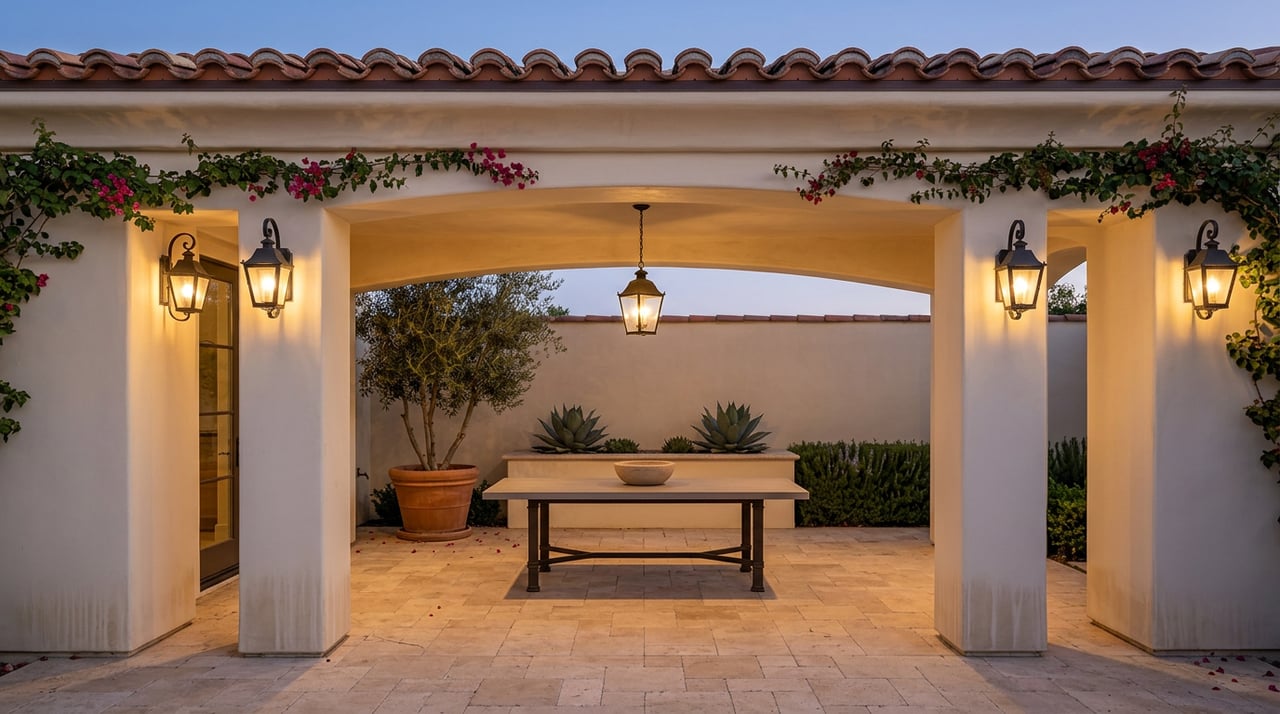
Shade sails, awnings, and pergolas cut solar load on the water surface. Even partial shade can reduce evaporation while improving comfort. On exposed lots, sails need engineered anchors rated for local wind. Select UV-stable fabrics and plan for periodic replacement due to sun exposure.
Design shading that preserves sightlines. Consider partial coverage or pairing a pergola over seating with selective shading of the pool surface during peak sun hours. Confirm placement with your HOA before building.
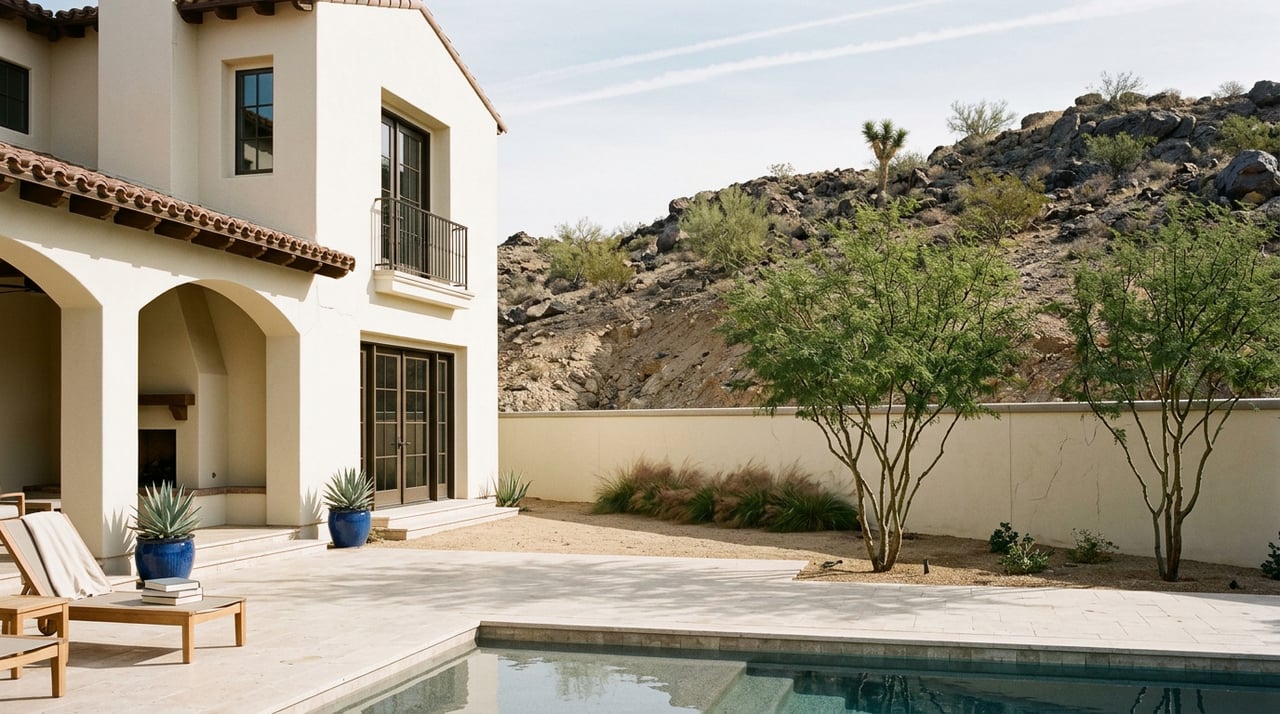
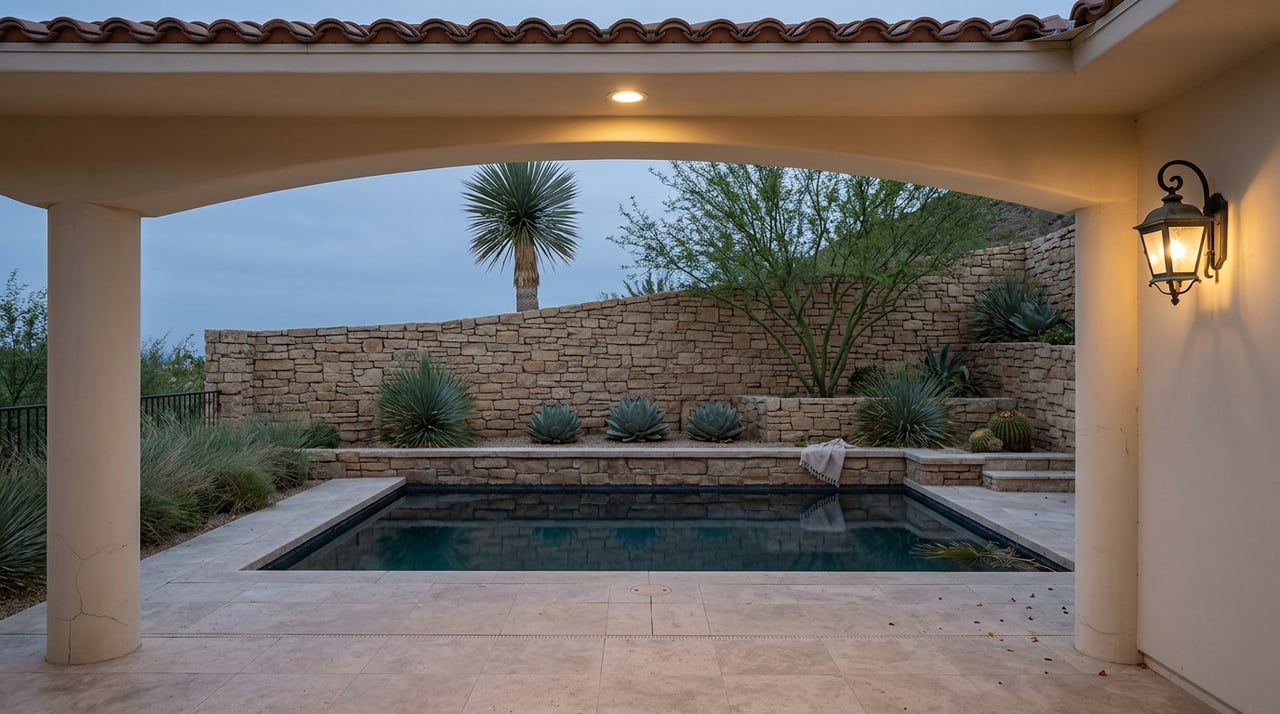
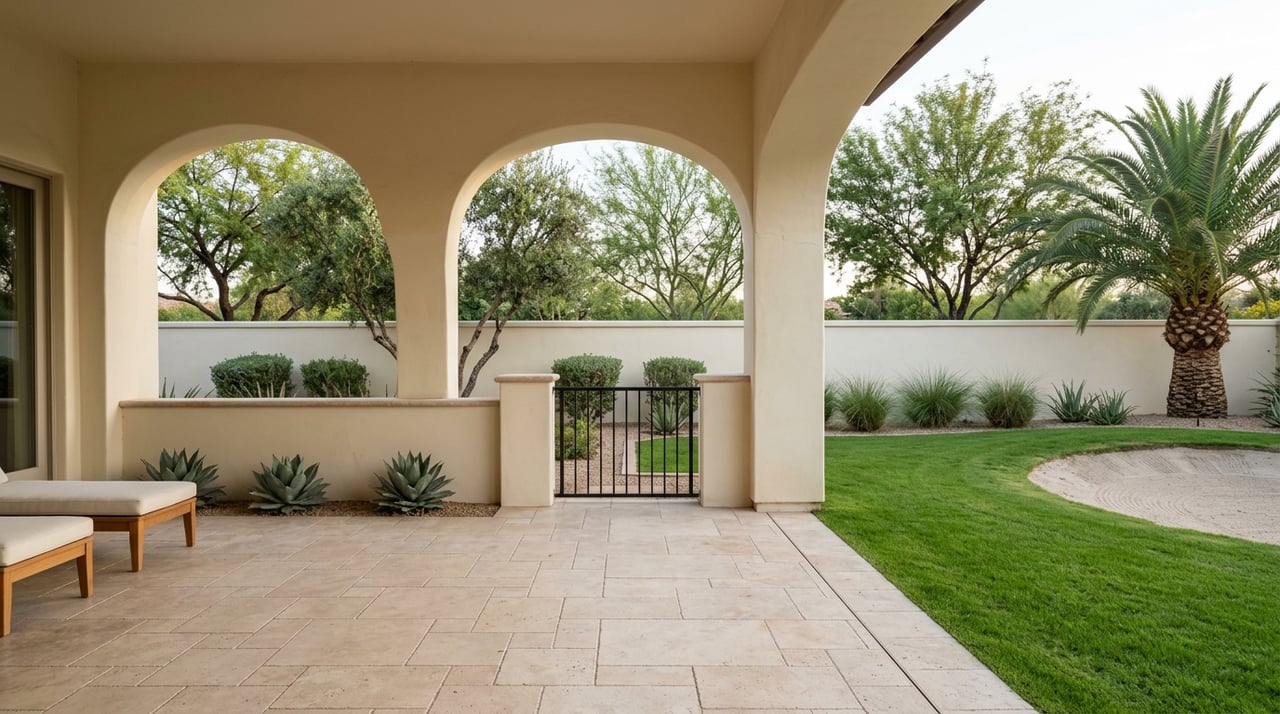
Reducing wind speed at the water surface is one of the most powerful ways to slow evaporation. Options include low masonry walls, glass screens, or strategic plantings. Solid barriers block wind most effectively but may impact views and require engineering on slopes. Vegetative windbreaks are visually softer and can complement desert design; choose drought-tolerant species that align with local guidance.
Windbreaks must be positioned carefully. Poorly placed barriers can create turbulence. Work with your designer to size, place, and angle windbreaks so they shield your pool without creating new airflow issues.
Expect architectural review for visible equipment, shade structures, and screening. Provide sketches that show materials, colors, and how the design protects community views. For large shade structures or walls, plan on building permits. Equipment upgrades may need mechanical or electrical permits, and hillside anchors often require engineered plans.
Check local guidance from regional water and city agencies. Southern Nevada Water Authority offers conservation education and may have rebate programs for water-saving pool measures. The City of Henderson outlines permit requirements for structures and pool equipment.
Use licensed pool and MEP contractors with hillside experience. Ask for examples of variable-speed programming and automation integration. For sails or larger shade elements, include a structural engineer to size anchors for local wind loads and soil conditions. Specify corrosion-resistant fasteners and desert-appropriate materials.
Variable-speed pumps often deliver meaningful electricity savings versus older single-speed units, with the exact result driven by your prior setup and schedule. Automation helps you capture those savings consistently. Pool covers can dramatically reduce evaporation and heat loss when used regularly, and automatic covers increase the odds you will use them.
Shading and wind mitigation can materially reduce evaporation on exposed pools, though results depend on coverage and wind speed reduction. Payback varies with electricity and water rates, existing equipment efficiency, and owner behavior. Track your bills to confirm outcomes and fine-tune your setup over time.
Hillside owners often want hidden equipment and less noise. Place equipment downslope where possible, within code and ventilation limits, and consider louvered or architecturally integrated screens. Variable-speed pumps run quieter at low RPM, which helps maintain a tranquil outdoor space.
Ready to tune your hillside pool for the desert while preserving your view? Let’s map a plan that fits your home, HOA, and lifestyle. Schedule a quick consult with Vegas Listing Experts to get started.
Stay up to date on the latest real estate trends.

Get assistance in determining current property value, crafting a competitive offer, writing and negotiating a contract, and much more. Contact me today.